


Mogadishu – Somalia’s path to self-reliance in national security received a major boost today with the handover of assorted, life-saving equipment to counter the persistent threat of improvised explosive devices (IEDs).
“Given the nature of the IED threat here in Somalia, it’s essential that we sustain the capabilities of the national security forces and particularly so, now that we’re thinking about the eventual and gradual withdrawal of the AU (African Union) forces,” the Director of the United Nations Mine Action Service (UNMAS), Ilene Cohn, said during the event.
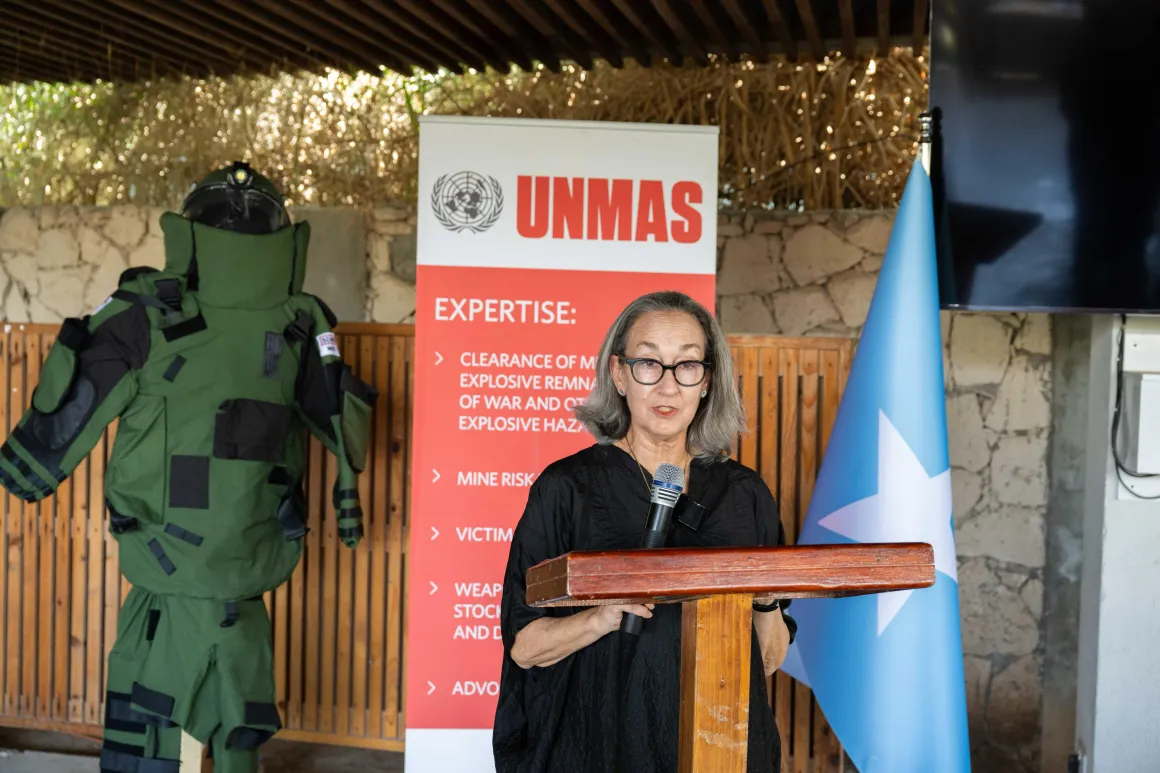
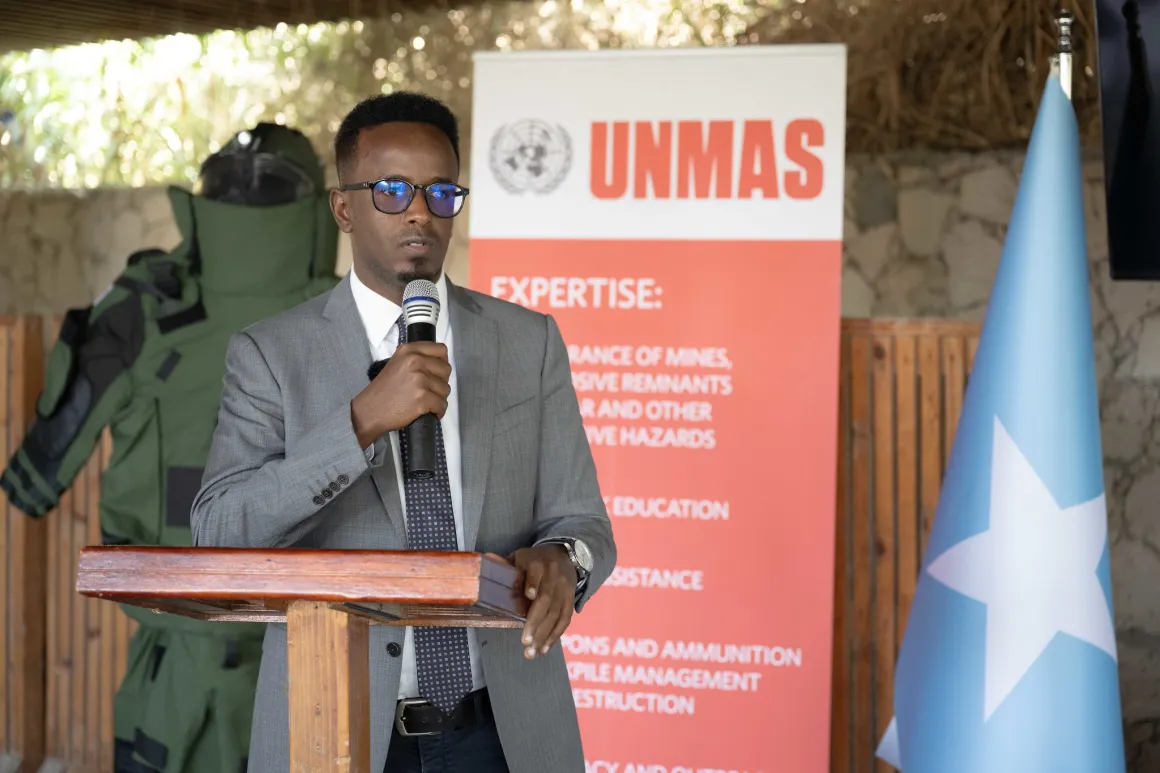
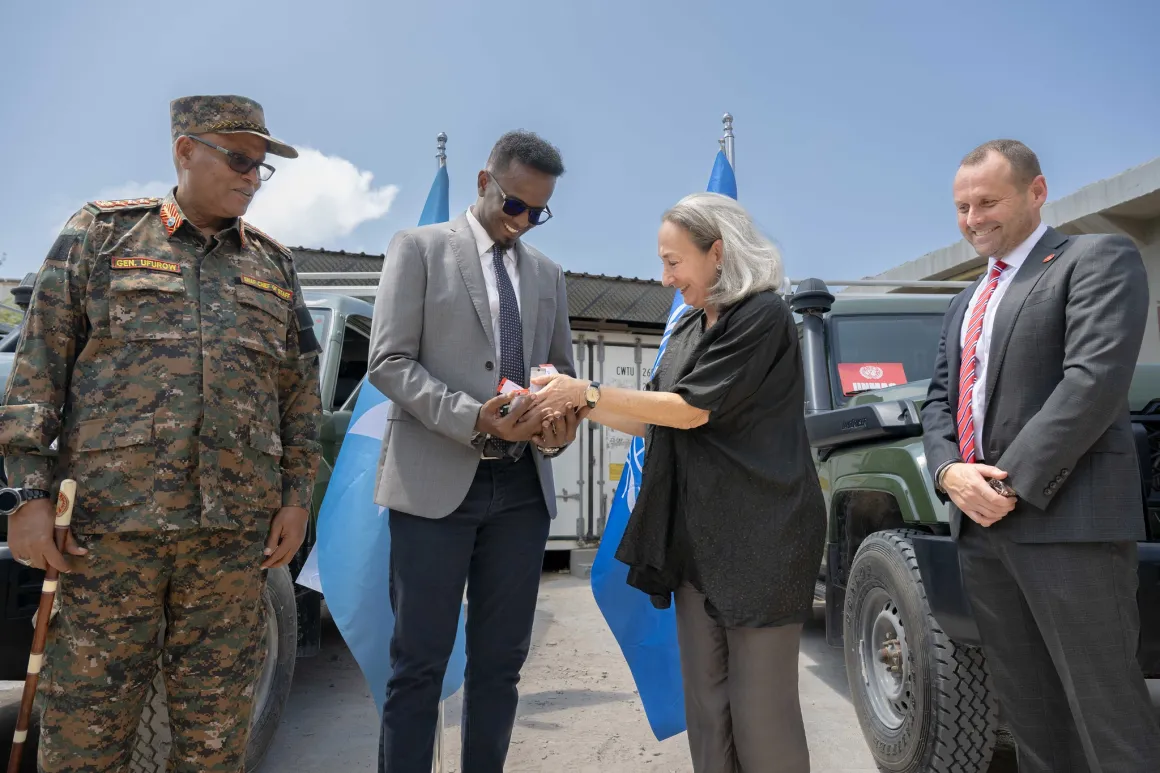
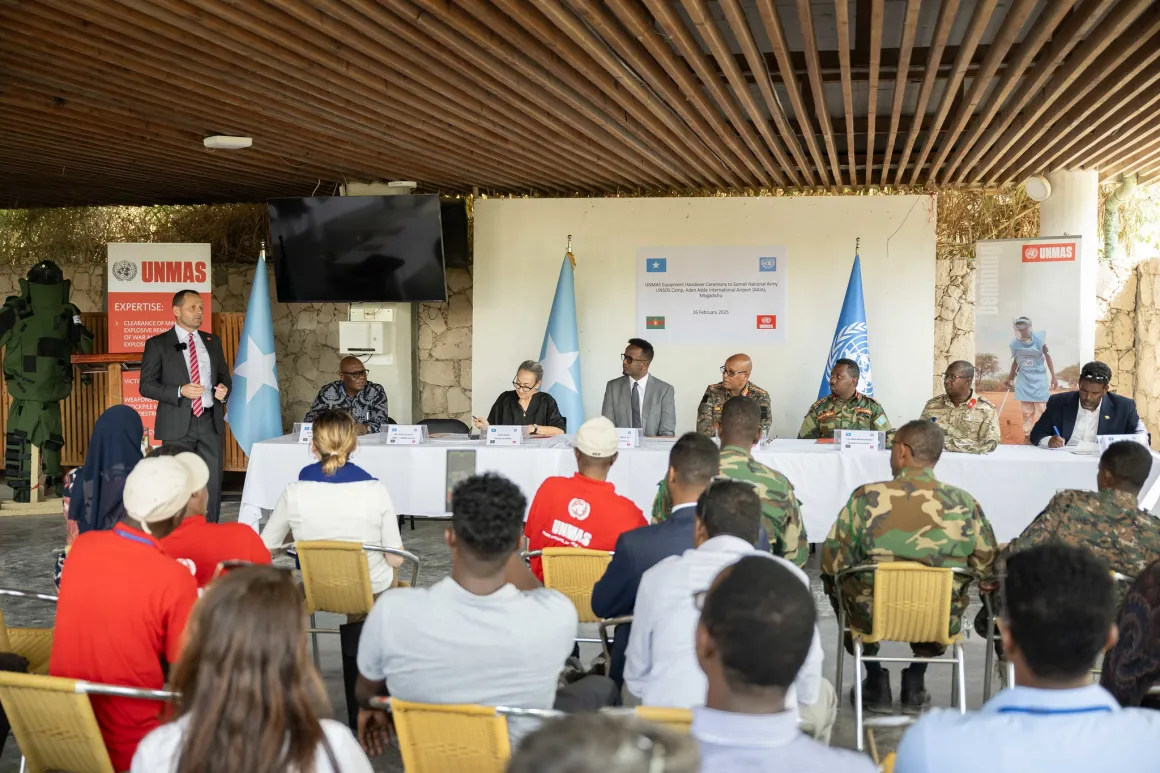
The handover ceremony took place in Mogadishu. Representing the Federal Government of Somalia (FGS) was its State Minister of Defence, Omar Ali Abdi, along with the Deputy Chief of Defence Forces, General Madey Nurey, and other senior officers from the Somali National Army.
“We need more training and equipment because we are engaged in a bitter war with our enemy who uses mines on the roads as a weapon of choice. The mines slow us down, and if we can overcome them, we’ll be able to liberate more areas,” Minister Abdi said in his remarks to the gathering, referring to the Al-Shabaab terrorist group.
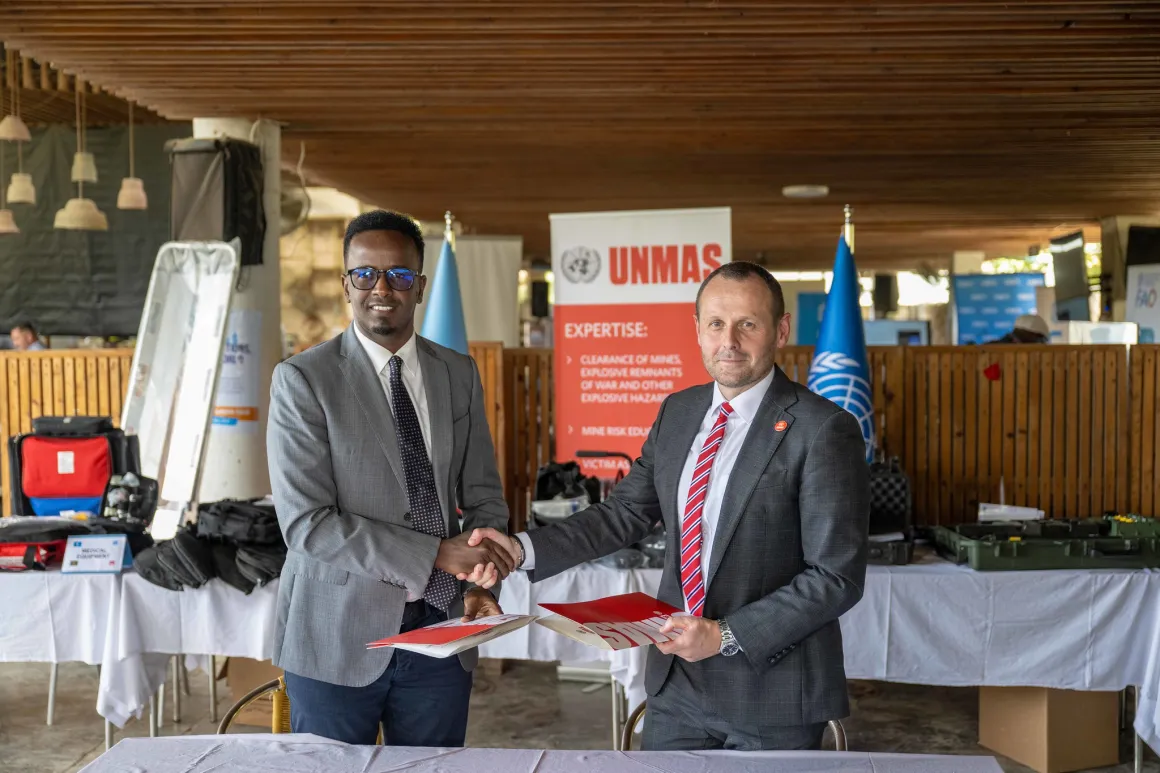
Along with the Chief of UNMAS’s programme in Somalia, Fran O’Grady, Minister Abdi signed for the handed-over material, which included vehicles, training-of-trainers’ (ToT) kits, route search (RS) gear, medical hardware, and explosive ordnance disposal (EOD) equipment.
In addition to the equipment, the ceremony also marked the completion of training of 51 of the SNA’s EOD and RS teams.
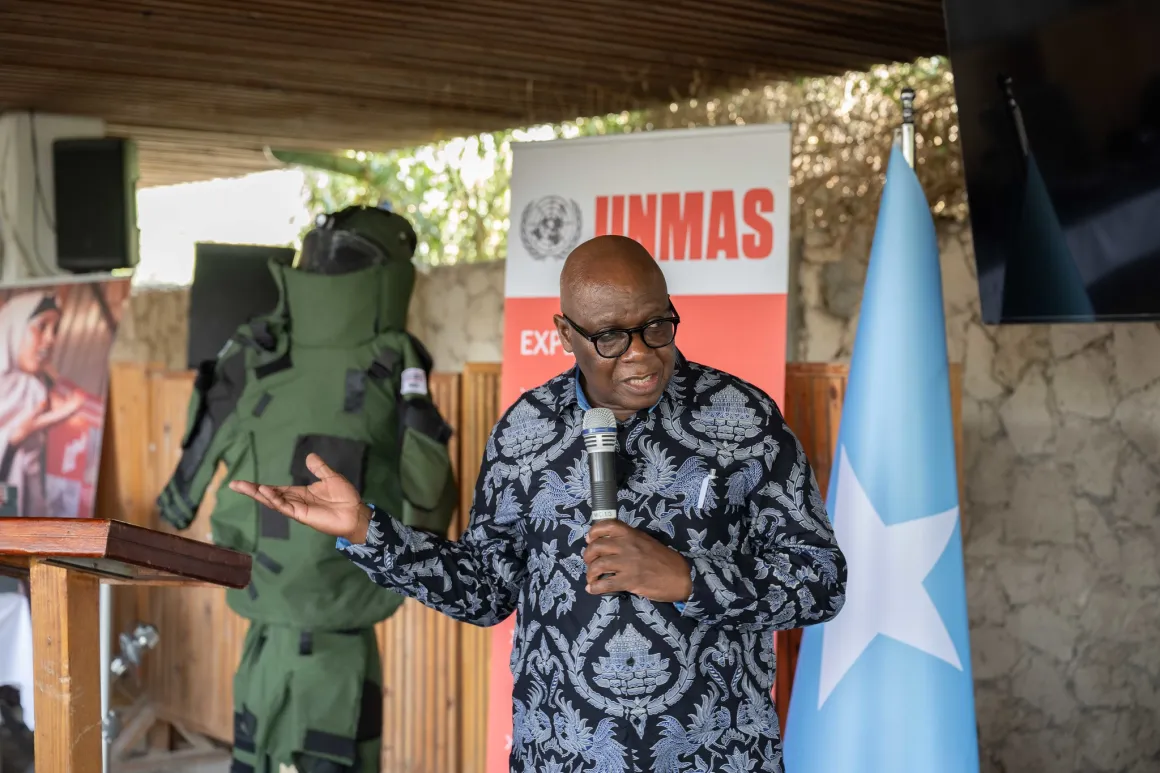
From the United Nations’ side, in addition to Ms. Cohn who is normally based at UN Headquarters in New York, was the UN Secretary-General’s Deputy Special Representative for Somalia, Raisedon Zenenga.
“The UN is creating real tangible capacity on the ground for the Somali security forces in EOD, IED clearance and this is what we’re here for – to build capacity that will last long after UNMAS, UNTMIS (UN Transitional Assistance Mission) and UNSOS (UN Support Office for Somalia) have left,” Mr. Zenenga said in his remarks to the gathering.
Long-running support
Across Somalia, IEDs continue to pose a significant threat to peace and security, with 597 devices resulting in more than 1,400 casualties last year. In tackling this threat, the SNA’s UNMAS-trained EOD teams have made tremendous progress, with a 70 per cent success rate in locating and clearing IEDs.
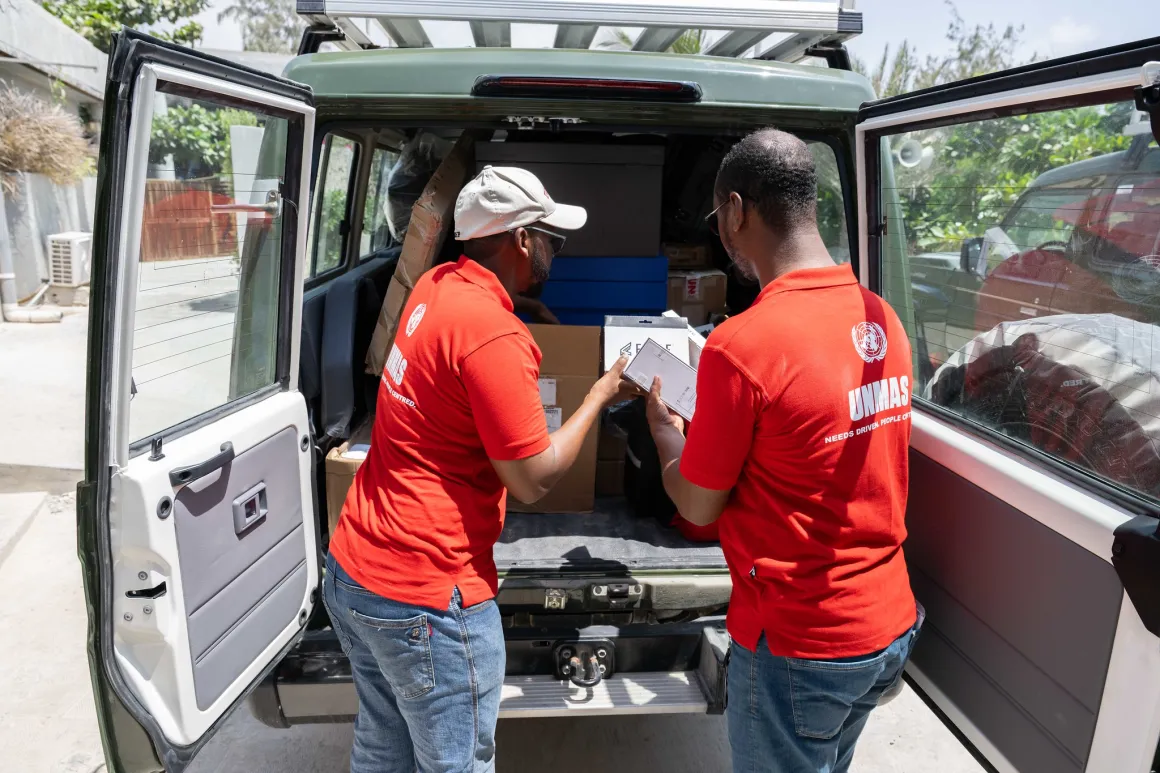
In addition to supporting explosive threat capacity development of Somali security forces through training, equipping and providing advisory support, UNMAS provides policy and technical advice to the FGS and the country’s Federal Member States on explosive hazard threat reduction, weapons and ammunition, and obligations under the 1997 Convention on the Prohibition of the Use, Stockpiling, Production and Transfer of Anti-Personnel Mines and on their Destruction.
From 2021 to date, UNMAS has trained and equipped 51 of the SNA’s EOD teams and trained trainers through ToT courses to ensure sustainability of capacity development efforts. UNMAS has also trained the Somali Police Force – through funding from the Government of Japan – resulting in a total of 21 trained and equipped EOD teams among the police force.
Addressing the ceremony, Mr. O’Grady reiterated the UN anti-mine service’s commitment to ensuring the SNA is fully capacitated to manage IED threats and contribute to Somalia’s long-term security and stability.
“Our work is far from over. There is a lot more work to do not only in training teams but also in all the other aspects that require to be in place for a sustainable EOD capacity, a Somali-led capacity to tackle these threats as they go forward,” he said.


