
Under Security Council Resolution 2753 (2024), adopted on 31 October 2024, the UN Transition Mission in Somalia (UNTMIS) continues to carry on with its primary responsibilities of supporting the Federal Government of Somalia’s peacebuilding and state-building priorities as initially set out under resolutions 2158 (2014), 2592 (2021), 2705 (2023), while transitioning its responsibilities to the Federal Government of Somalia and the UNCT.
UNTMIS is implementing a phased transition (2024-2026) to progressively transfer its political and mediation responsibilities to national institutions and Somali-led initiatives. This shift is in line with the broader UN strategy to strengthen national ownership of governance and peace processes, ensuring that Somalia’s institutions take the lead in shaping the country’s future.
The Security Council, in consultation with the Federal Government of Somalia, has identified the following priority areas for the transition period:
Support for State-Building – including the constitutional review process.
Electoral Support – facilitating free and fair elections through inclusive and transparent one-person, one-vote processes.
Capacity Building and Policy Guidance – offering technical assistance and facilitating dialogue to promote reconciliation.
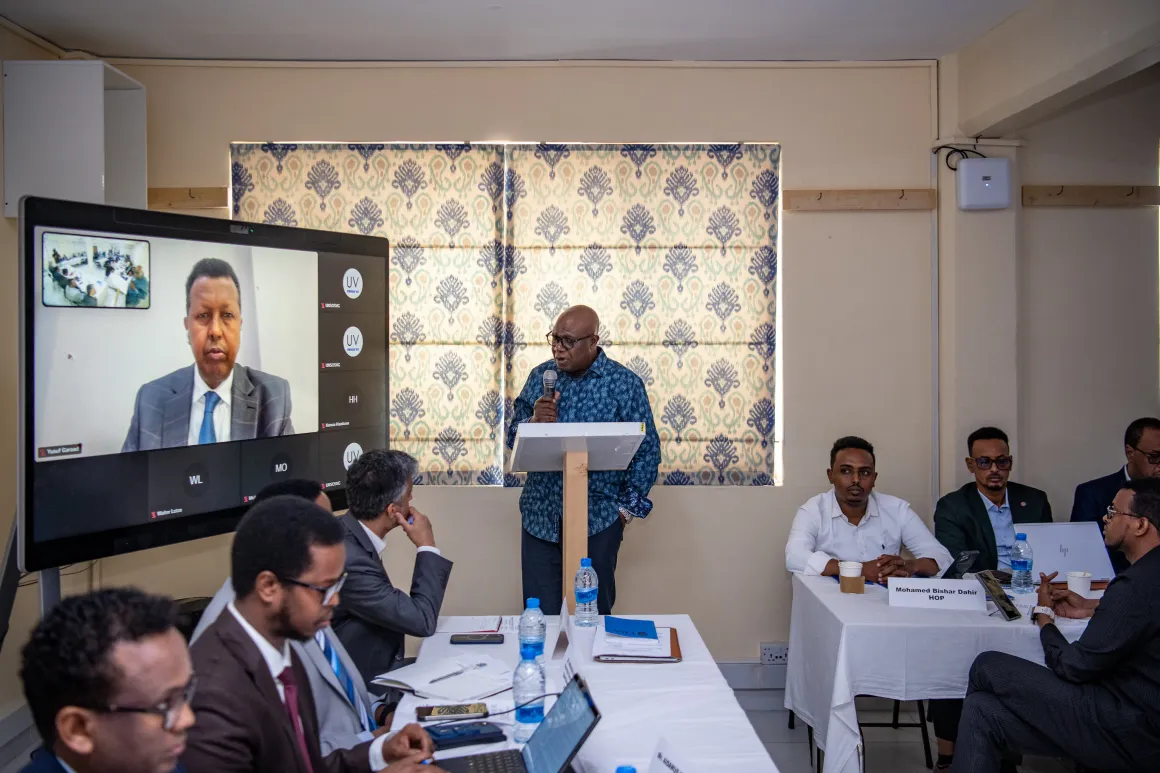
UNTMIS’ Political Affairs and Mediation Group (PAMG) supports the Mission leadership in employing good offices to facilitate dialogue and encourage political consensus on the country’s national priorities. By engaging with Somali leaders, political stakeholders, and civil society, the Mission helps advance peaceful solutions to challenges that arise during Somalia’s transition and facilitates in maintaining stability, supporting reconciliation, and ensuring a sustainable political settlement.
To that effect, PAMG plays a pivotal role in supporting efforts to strengthen peacebuilding and state-building efforts by providing strategic policy advice, monitoring and reporting on political developments within Somalia and the region.
Key Areas of Work
1. State-Building and Constitutional Reform
Utilizing the good offices of UNTMIS leadership to engage Somali stakeholders in dialogue and consensus-building efforts.
Supporting Somalia’s ongoing constitutional review process, ensuring it reflects national consensus and promotes a fair and representative governance framework.
Encouraging sustained cooperation between the Federal Government of Somalia (FGS) and Federal Member States (FMS) to advance institutional reforms and strengthen national unity.
UNTMIS has worked closely with and provided technical assistance to the Independent Constitutional Review and Implementation Commission (ICRIC) to finalize key aspects of the federal constitution.
This includes mediation between federal and state authorities on contentious issues such as power-sharing, resource allocation, and governance structures. Furthermore, UN facilitation has helped strengthen the relationship between the FGS and FMSs through political dialogue, which has been key to advancing governance agreements. In addition, Mission leadership has used its good offices to mediate political disagreements between the Federal Government and opposition figures regarding electoral delays and leadership disputes, ensuring a peaceful transfer of power to new administrations.
2. Political Dialogue & Reconciliation
Facilitating inclusive political dialogue at the national and local levels to address political disputes and advance sustainable governance solutions.
Promoting the full, equal and meaningful participation of women, youth and marginalized groups in decision-making processes to ensure an inclusive peace.
Supporting local and clan-based reconciliation processes, working with Somali communities to build trust, resolve historical grievances, and foster social cohesion. Strengthening local and national mediation mechanisms to prevent and resolve political disputes before they escalate.
UN-supported initiatives in Galmudug, Hirshabelle and Jubaland have helped mediate conflicts between clans over resource disputes and political representation, leading to peace agreements that prevent local conflicts from escalating into broader instability. There have also been initiatives to strengthen the ability of women and youth organizations to participate in political processes, ensuring their voices shape national peacebuilding efforts.
Put in place jointly with the UN Development Programme (UNDP), the UNDP/UNTMIS State-Building and Reconciliation Support Programme assisted the Ministry of Interior and Federal Affairs in facilitating dialogues and collaboration between different layers of the government on the allocation of power (related to the federalist model) and the reconciliation framework
3. Coordination and International Engagement
Working in close coordination with regional actors, including the African Union, Intergovernmental Authority on Development, and international partners, to facilitate political agreements and ensure alignment with Somalia’s peace and development priorities.
Enhancing cooperation between the United Nations Country Team, regional organizations, and international partners to ensure coordinated support for Somalia’s political and peacebuilding efforts.
Supporting Somalia’s engagement with the UN Peacebuilding Commission, leveraging international expertise and resources to strengthen national peacebuilding initiatives.
In discharging these activities, PAMG maintains a presence in all regions of Somalia to support and facilitate regional administrations’ engagement and alignment as appropriate to federal structures.
Civil Society
Civil society organizations (CSOs) in Somalia continue to play a crucial role in the country’s peacebuilding and state-building trajectory, including in fostering confidence in peace processes and promoting good governance and greater accountability to facilitate the task of building peace and democratic institutions.
PAMG is dedicated to mobilising CSOs as key partners, ensuring that their voices and perspectives on issues affecting Somalia are heard by both Somali and international policymakers. PAMG also promotes information-sharing and capacity-building to empower civil society organizations, including women and youth groups, enhancing their ability to contribute effectively to Somalia's peacebuilding and state-building efforts.